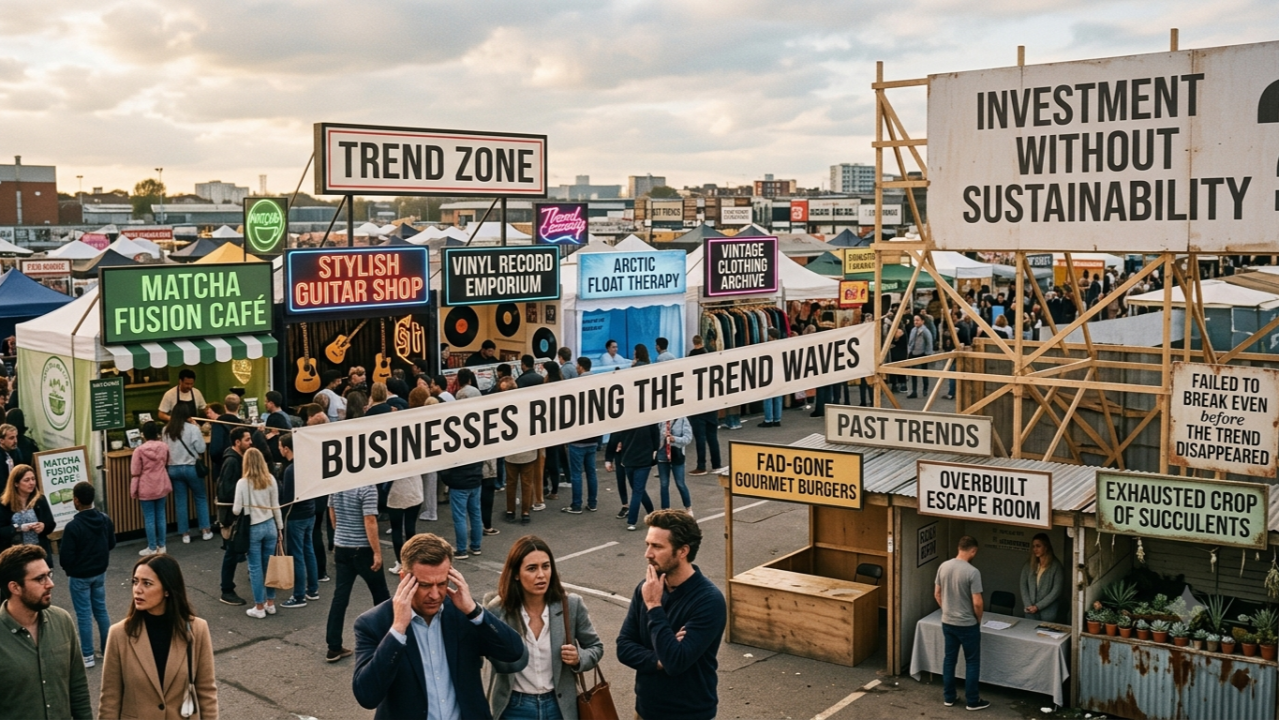
If you look around, everyone is running behind a trend. It may be a tourist spot, a musical instrument, an event, a sport, a hobby. Everywhere, in everything, there is at least one visible trend. Some even call it FOMO.
When it lasts, everything looks good. It may create some short-term problems such as overcrowding, extended rush hours, etc. It’s still okay.
But there’s one problem it creates, which almost nobody notices: the sustainability problem.
Every trend, directly or indirectly, gives rise to a business ecosystem. Every trend brings in a lot of small and large businesses, many times with huge investments.
A trend often gives you a false signal of market size and opportunity. It makes you feel like there is enough potential to make investments. Even though you see every other person getting into the same business, you still feel there’s enough meat for everyone in the room. Until there’s none for even one.
That’s how it works. Everything gets overcrowded and, all of a sudden, it’s all empty, as if nothing ever existed. Then again, you will have to go searching for a room that’s full to put up your stall.
The issue here is that you will have to keep pivoting to something that is an interesting trend, or technically, a market which has a lot of buyers. Again, the problem is that everyone is doing the same thing, pivoting again and again as and when the trend changes.
Well, pivoting isn’t bad. It’s a common business practice. Even those big businesses which people look at as aspirational businesses pivoted in their initial phases. But the important distinction one should understand is this: pivoting a business model is okay, but having a business model structured around pivoting is dangerous.
Every time you enter a new market, it doesn’t matter how big that market is, you will have to spend on customer acquisition. Just because someone purchased a guitar from you last month, they won’t walk into your new kitchen equipment shop even though everyone is suddenly into cooking.
The cost associated with customer acquisition can be huge every time you enter a new market. And if you are building a business based on the volume created by an underlying trend, you may not build a business that earns enough to break even before the trend disappears.
Making merry out of a trend isn’t wrong, but you shouldn’t make a huge investment just to enter that hot market created by a trend without studying the sustainable market it creates even after the early rush is over.
For example, if you are a cafe owner who serves coffee and tea, adding matcha to your menu isn’t a big deal. You need very limited additions to your supply lines and processes, SOPs, etc. But for someone who is into a fruit juice business, getting matcha onto the menu could require a lot more investment, both in terms of time and money. New machines, crockery, supply lines, training, SOPs, and what not.
I hope you got the point.
Now the question is, is it wrong to jump into a trend to maximise profit? Absolutely not. But the important thing to keep in mind is: will it be sustainable even after the trend is gone? Will it have enough customers even after the trend is gone? Will I be able to recover the investments, both time and money, without needing to pivot again?
If you have an answer you are satisfied with, if you have an answer that lets you sleep well, then there’s no reason why you shouldn’t jump onto the boat that has a new opportunity.
Until the next one, let’s observe how many such cases we have seen around us, how many of them got it right, and how many were not so lucky.